Unclogging a Clogged Milk Duct

As a breastfeeding and pumping mom with oversupply, milk duct clogs are my jam. Here are my tricks for getting those painful (and potentially harmful) buggers out:

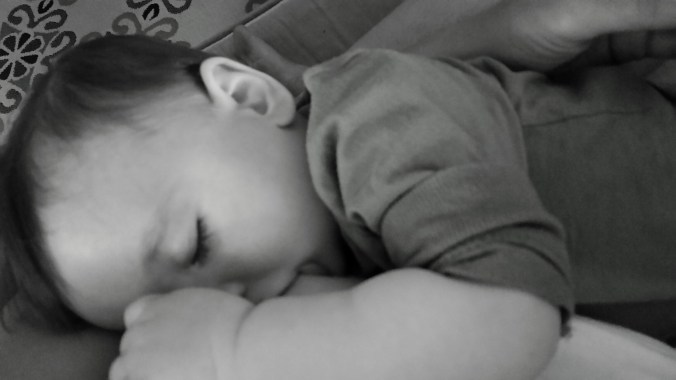
2016-05-04 06.39.11

My Tried and True Method

1) I take ibuprofen and Sunflower Lecithin per the manufacturer’s instructions (please consult a physician before taking any medications.)

2) Take a warm shower and let the water fall on the affected breast

3) Under the water, firmly massage from the clog toward the nipple

4) After the shower, grab your breast pump and a vibrating device (either the mechanical portion of your pump if it’s handheld, an electric toothbrush, a massager, etc.) and pump while holding the vibrating device on the clog. (Add in extra stimulation and letdown phases to your pumping session to ensure as much milk is released possible.)

5) Nurse your baby on the affected breast.

6) If still clogged, place a washcloth in very warm (not scalding) water mixed with Epsom salts. Apply the soaked cloth to the clogged area. Re-soak and reapply 5-6 times.

7) Pump with the vibrating device or breastfeed again.

Once the clog has been released, repeat steps 1-5 at least once a day for three days to ensure the duct doesn’t re-clog.

** Of course, if you experience intense pain, fever, chills, and/or redness at the clogged site, immediately contact your physician. **

Happy milking!


My Superpower

#3 nursing away a fever (10mo)

#3 nursing away a fever

Nourish, comfort, protect, heal… breastfeeding is my super power. It’s amazing to be able help my little one fight off viruses, regulate a feverish body temperature, and provide nutrient-dense, easily digestible food straight from my body when teething makes chewing painful or an upset tummy doesn’t allow anything else to stay down.

One does not realize the full-body effort of nursing until the morning after an all-night nursing binge. Despite providing sustenance for hours straight, your breasts are engorged and ready for more.You wake up exhausted in every way, starving, thirsty, sore, achey… it’s as if you ran an overnight marathon. What did you really do? Lie on your side as your little one nursed like a piglet All. Night. Long.

Breastfeeding is messy, it’s laborious, it’s taxing, it’s beautiful, it’s miraculous, it’s a gift. Keep on nursing on!

Nearly Human

#3 used to be a decent sleeper — he was somewhere between the torturous night-grazing of #1 and the dependable slumber of #2 — but the 4-month sleep regression changed all of that. He never quite got the hang of regularly sleeping through the night after that sleepless tailspin.

For the last two weeks, #3 (9-months-old) has been in some sort of sleep crapiness. He awakes to nurse — we’re talking competitive eating here, no “human pacifier” stuff — 6 times each night. I’ve forgotten what being rested or having a functioning mind feels like.

HOWEVER, last night he only awoke three times. That means I got REM sleep. Oh holy sleep gods, I feel as if I can do anything!

I actually remembered to put my tea in the kettle to steep. I didn’t groan like an old ship as I pulled myself out of bed this morning. I didn’t zone out in the middle of assembling my pump parts trying to remember what day it was. I feel nearly human! 

**Third-time-mom disclaimer: I know full well the danger of claiming one’s baby is sleeping better or well. I am not expecting REM sleep to be repeated, but it was nice last night. Be kind sleep gods!**

First Kid vs. Third Kid

My parenting has changed drastically from having my first child to now with my third.

Naps-

#1: In the early weeks, I remained completely still as she napped on me multiple times each day. Had to pee? Hold it! Had to sneeze? Don’t even think about it! Later on, our schedule all day, every day revolved around her 2-naps per day schedule. She always napped in her crib. Plans would be rearranged if she overslept.

#3: He may catch a morning nap in the carseat or Ergo, but it’s not guaranteed; the afternoon nap happens at home but he will be stirred if he over-sleeps. We’ve got places to be!

Nursing-

#1: I hid in another room to nurse at family gatherings, even when she was cluster-feeding. I pumped to bottle feed in public. We always had a suction bulb nearby just in case. I feared nursing in public.

#3: He nurses in the Ergo multiple times per day. He stays latched as I chase after #1 & #2… I suspect I could latch him on without the carrier and he’d be able to dangle their by way of suction

Germs-

#1: Everybody had to scrub up before touching her. I attached hand sanitizer to her stroller. Any sniffles and you were banned. I feared older kids sharing their schoolyard cooties with her. No sitting on the floor without a blanket. Pacifiers were thoroughly cleansed if they touched anything but her mouth. Bottles were sterlized.

#3: Germs boost the immune system.

Sleep-

#1: I forced myself to sit up and stay awake for every single night feeding. I fretted over every sleep grunt or hiccup. I was entirely certain I’d never sleep again.

#3: He nurses in our bed while I try to catch some shut-eye. I’m still not sleeping.

Development-

#1: I documented her every movement in a journal. I wrote multi-page letters to her biweekly. I read “What to Expect the First Year.” I encouraged her physical development with great anticipation. We attended baby gymnastics classes and mommy-and-me swim. (She didn’t regularly walk until 19-months any way.)

#3: I have maybe two passages written in his baby book (note to self: try to remember when he got his first tooth… he’s on tooth #4 now.) He’ll walk when he walks and then I’m screwed.

Clothing-

#1: Everything was new and coordinated. Getting her dressed was fun. I changed her multiple times a day, completely redressing her every time her outfit had a smear, dribble, or spot on it.

#3: Any top + any pants = dressed. Unless he pooped up his back, wipe the onesie with a baby wipe and keep it rolling, everything is hand-me-downs anyway.

Food Introduction-

#1: It was a momentous occasion to introduce solid foods. Each mealtime was an event. Each food was painstakingly introduced with cautious assessment of possible allergic reaction.

#3: He hated purees. He eats what we eat.

Putting Baby Down-

#1: I would place her in her Exersaucer or baby swing, ensuring she was reasonably pleased before I tended to whatever duties required me to put her down.

#3: I put him on the floor.

Toys-

#1: Most of her toys were new. All were thoroughly washed and were sanitized if she ever got the sniffles.

#3: I maybe threw some of his cloth toys in the wash during a nesting frenzy before he was born… I think?? He plays with his own toys, as well as #1 and #2’s toys, but prefers trying to tear apart the shoe basket.


Life is nuttier with 3 kids, but it’s easier not being so caught up in the first-time-mom worry. That’s just exhausting! You have to live it to learn it.

Milk Donation: Labor of Love

IMG_20151212_111252

780oz (6 gallons) of breast milk for donation

Milk donation… it’s an ancient practice to share one’s breast milk with another’s child. However, somewhere along the way it faded into a fray movement… a suspiciously regarded practice associated with pachuli-scented hippies and cloth-diapering baby-wearers. I am none of those things (I rest somewhere around a 4 on a 1-10 scale of hippiness). Though, I do wear #3 as a matter of survival since I have yet to sprout a third arm. Mainly, I am a believer in sharing one’s excess with those in need.

When I sort through my pantry and donate boxed and canned goods to my local the local food pantry, no one bats an eye. When I donate old housewares and clothes to charity, no one flinches. When I donated my hair, others asked for details so they could follow suit. When one gives blood or agrees to be an organ donor, society regards the act as socially responsible. However, when people hear I donate my surplus breast milk — 20oz daily that accumulates, unused, in my chest freezer because my littlest eats straight from the tap — to a mom who cannot make enough, despite her phenomenal efforts, people get twitchy.

Moms of young children who have nursed and/or pumped breast milk are generally impressed and express interest. Individuals who have not nursed or were brought up when formula companies were heavily marketing their product as being “better than nature” often respond in disgust, trepidation, and/or bewilderment. Honestly, though, I don’t care what others opinions are on the topic (though I wish for wider acceptance and awareness, of course); their opinions won’t hinder my donations.

“Why don’t they just use formula?” Some quip. Formula isn’t always a feasible option. Some babies can’t or won’t drink formula, and some families simply do not prefer to use formula (just as some families choose not to breast feed.) Often, babies who are sensitive to dairy ingested by their breast milk provider also react to soy-based formulas. In these circumstances — if the mother cannot produce enough breast milk or is waiting for dairy to leave her own system so she can provide her own breast milk for her child without causing him/her pain, or if the dairy-sensitive child’s guardian is not a lactating female — a milk donor who does not eat dairy products is the route to go. As a dairy-free donor, I donated thousands of ounces to nourish such children.

“Isn’t it risky?” People ask, citing concerns over disease and bacteria. Milk-sharing is an informed risk, like consuming raw seafood or eating bake sale goods. Donors who have been screened by milk banks — milk banks are an option for some recipients to use as a means to receive donated milk, though it would be costly and not all qualify — complete medical screening akin to blood donor screening. Milk banks take a further step by pasteurizing the donor milk. Milk recipients can pasteurize milk at home, if desired. However, many pathogens are eliminated when the milk is frozen, as is the standard method for donor milk to be delivered to recipients.

“You can’t trust people; how do you know the milk you’re receiving is safe?” If you receive donated breast milk — which is different from purchased breast milk — you are being given breast milk from a mother who (except in cases of infant loss) is providing that same milk for her own child. That mother is providing you with milk she had either originally pumped and frozen with the intent of feeding it to her own child, or she is pumping the breast milk purely for donation in addition to nursing her own child. Each pumping session takes 15-45 minutes, this does not count cleansing the pump parts or bagging and freezing the milk. The mother is doing this without receiving any repayment and often loses money due to milk bag and pump parts costs. It would be incredibly bizarre for the donated (not purchased) milk you receive to be anything but pure breast milk, pumped with the loving intention of nourishing a child.

“It’s body fluid. Eww!” First of all, breast milk is not equal to blood, stool, or urine. Breast milk is created solely to nourish a child; it is food. Breast milk is filled with antibodies and has amazing antibacterial properties, thus enabling it to be surprisingly resistant to spoilage. Cow’s milk is just as much a bodily fluid as human breast milk.

The main thing to remember when seeking a donor or when becoming a breast milk donor is: open, honest communication. Recipients should feel free to ask potential donors about medical history, dietary habits, drug and alcohol intake, etc. Most donors welcome and expect these questions, as long as they are asked graciously and respectfully of course. Similarly, donors should feel free to ask why the milk is being sought, how old the child is, etc.

Breast milk donation

Bagging 320oz of frozen breast milk

Oversupply, despite its downfalls (clogged ducts, risks of mastitis, engorgment discomfort, frequent pumping, etc.) is a gift for which I never would have asked but for which I am immensely grateful. I cherish being granted the opportunity to help nourish another’s child, to have my oversupply make sense considering others struggle with production, to have amazing families become a part of my life by way of milk-sharing. Milk-sharing has enabled me to turn an otherwise bothersome medical anomaly into an immensely rewarding service.

If you know of anyone interested in milk donation, whether as a recipient or as a donor, I am more than happy to be a resource. Milk-sharing is a fulfilling way of sharing love and excess with others. Aiding others in beginning their own milk donation journey is an undertaking I adore. Share on!

Diaries of a Nursing Mom

1) During a morning kid bath — utilized solely for the purpose of entertaining and containing #1  and #2 while I got ready for the day — #1 pretended to nurse Mermaid Barbie. “I’m the mommy,” she said to #2, “you’re the daddy. You can’t feed the baby.” “Well, if the mommy pumps breast milk into a bottle, the daddy could feed the baby,” I remind her. “Hand me the bucket, please,” #1 demands of #2. #1 places the bucket beneath her nipple for a five-count: “Here’s the breast milk,” she says as she hands the bucket to #2, “Now, you can feed the baby.” Then #1 cradles Mermaid Barbie back to her chest to “nurse” as #2 pretends to bottle feed his doll.

2) #3 bit me… HARD. (Three exclusively breastfed babies, months of pumping for my own children and, then, solely for donation; I’m no peach blossom.) “My kiss it and make it better.” #2 offers. I thank him but tell him Mommy will be OK. #1 reprimands #3 for biting: “Mommy feeds you. No biting!” Then I fish two shards of wicker basket from #3’s mouth. The basket from which I had just shooed him away because he likes snapping apart the woven pieces. Lovely.

3) #3 is experiencing a growth spurt, which means he nurses All. Night. Long. When he awakes in the morning, roughly 20-30 minutes after his last feeding, he greets me with a huge smile and a happy squeak. It’s as if he hadn’t been suctioned to me for most of the night. He’s either senile or charming, I’m too tired to know which one.