Bad Mom “Friends”

Too many moms feel pushed to feign perfection due to judgment. Not just judgment from faceless screen names and social media associations, not just from the child-free 20-something at Starbucks, family that simply doesn’t “get it”, or the snippy blue-hair at Target, but from fellow mom friends as well.

I understand the drive to tidy up your home a bit before company comes, for respectability’s sake. I get the desire to swipe on some mascara and brows to feel presentable. I honor the pull to change out of the three-day-old yoga pants splotched with mystery stains and into some jeans (or clean yoga pants.) I get it!

However, to feel the need to conceal the potty-training pandemonium, the tantrum disasters, the back-talk dilemmas, the laundry mayhem, the parenting conundrums, the nitty-gritty real life details because your friends will judge you? To feel the push to hire a house cleaner to visit prior to hosting a friend for a playdate because you fear gossip over your housekeeping? To feel compelled to wear specific brands and certain fashions to obtain praise and approval, and avoid catty side-eyes, from your friends? To feel pressured to present your life, child(ren), and home as flawless for risk of judgment from your friends? Those, dear one, are not your friends.

If you call judgmental fellow moms your “village,” honey, you need to move to a new “village.” If your mom friends are catty and thrive on tearing one another down instead of building and supporting each other, sweetheart, those are not mom friends… they’re immature, venomous toxins.

Many of us moms fear judgment from our peers so greatly we conceal ourselves from those we gift the title “friend.” I’m sorry but, why? Why do we allow ourselves to be belittled, to feel self-conscious, to feel lesser because of our friends? Why would we call these women “friends?”

If your child came to you telling you that his/her friends judged him/her in these ways, would you approve of these so-called “friends?” Would you encourage your child to continue socializing and bending him/herself to meet the approval of these “friends?” I hope not! So why do we moms provide such an example of friendship for our own children?

Moms, you’re worth more than that. You deserve more than that.

If your friends make you feel small and insecure, find new friends who lift you up and support you. Be the kind of friend you want to have and you’ll attract the type of friend you want and deserve.

Friends support each other, laugh with each other, live honestly with each other. Friends do not judge and gossip about one another. Friends do not make friends feel lesser or insecure. True friends make you feel safe, happy, and loved in their presence.

Stop feigning perfection. Stop driving yourself mad trying to please catty, ridiculous standards. Be genuine. Be happy. Be you.

The Perfect Parent

There is a misconception among parents that someone, some unicorn-like humanoid, actually has this whole parenting thing figured out. That perfection in parenting exists. Yeah… no.

We’re all hanging on by a well-worn thread. Not one of us has it all figured out. It’s simply a balance, with some disguising their flawed normalcy better than others.

If we are head of the PTA, the class party parent, and the go-to for artfully designed cupcakes, our minivans are coated in a 2-inch thick layer of Goldfish crumbs and mystery goo. If our kids are wearing spotless smocked monogrammed garments, our pantry looks like an extreme couponer’s shopping cart. If we send our kids to school with perfectly arranged organic, cruelty-free, well-balanced bento box lunches, then our laundry piles have their own zip codes. If our lawns are perfectly manicured and hedges neatly preened, our idea of a homemade meal is serving Chick-fil-A on actual plates instead of fishing through the bag in a family free-for-all.

One kid or five, single parent or espoused, working outside of the home or stay-at-home, no one has it unwaveringly figured out. None of us gets it right all the time. Not a single one of us has every aspect of home, school, and work life precisely pieced together in a pristine algorithim.

We’re all flawed. We all screw up. We all have moments of parenting triumphs and instances of miserable failings. We’re human!

The perfect parent doesn’t exist. Except for the child-free individuals… they are, of course, the perfect parents.

Parenting in the Trenches

Some days you glide through smiling and snapping photo after photo on your smartphone, posting and tweeting the glory of your day. Other days you lurch and drag yourself through the hours — all 24 of them — reaching the finish line covered in food, feces, and spit-up… but you survived, they survived, and only your ego was maimed in the process (and maybe the curtains.)

20150713_104344

Then there are the bumpy days that are a mixture of positivity and pain-in-the-ass, leaving you winded but oddly in tact at the end of the day. Those days are commonplace, benign, and totally survivable.

Some days start out well then careen downward in an unexpected tailspin. You reel in confusion over how quickly everything crumbled. You try to determine the exact moment of hubris or foible that incinerated your glorious day. Sometimes you recover and end your day on a mediocre note. Other days… well, those are the days you thank the heavens for wine.

20140812_154523

No matter what your “friends'” lives look like on social media, no matter the seeming perfection of fellow preschool moms or playground parents, we all stumble through our days. You’re not alone. Parenting is hard, dirty, taxing, and wholly unglamorous.

Dust yourself off, take a deep breath (and perhaps a gulp of wine), and trudge to bed knowing you’re not the only soldier in the trenches. You’ve got this!

Seeking Harmony

Every day, in most every situation, I have two choices: harmony or discord. More often than not, I prefer harmony. So I strive to choose it.

When a stranger is snarky to me, instead of imitating the behavior I amplify my kindness. I smile genuinely, assuming the individual is experiencing a level of inner discord that has left him/her in a cloud of negativity. Often, my decision to spread kindness instead of distain, prompts the individual to shift to a more pleasant mode. Sometimes it doesn’t work. That’s ok. Another’s negativity doesn’t have to doom my own harmony.

When I suffer a personal setback I redirect mental negativity, stopping harmful self-talk immediately and recharting unhelpful thought paths. Instead, I take a deep breath and work to shift my perspective. I strive to focus on the positive: a solution and a lesson. Then, I remind myself to be grateful. Solutions give me the power to overcome the hurdle, lessons enable me to avoid the pitfall again, and gratitude keeps me grounded.

When someone says something to me I have two choices: I can allow my mind to take a negative bend and tend toward offense, or I can keep to a positive thought path and consider statements in a positive light. Often, it is simply a matter of reframing. For example, if a stranger says, “Wow, you have a lot of kids!” I could either decide to be offended by a perceived attack on my family planning choices, or I could accept the statement as a truth that was delivered with a friendly intent. Often, I find, reframing a comment’s context — realizing the statement was delivered with positive, friendly, or helpful intent — helps greatly in maintaining harmony. Choosing to take offense easily and often is a mindset, and it entirely counteracts my goal of harmony.

When I feel I am wronged, I try to respond positively but directly to the offense. I decide whether the perceived slight is worthy of addressing, if vocalizing my sentiments would prove useful or simply spawn negativity, and how to either discuss or let go of the infraction. I am not a doormat but I need not be a warmonger.

I choose resolution over victimization. Resolution will fix or at least address the issue, characterizing myself as a victim is useless and debasing. Being a perpetual victim is a mindset, and it is not one I allow myself to enable. Instead, I aim to learn from the situation, move forward with my knowledge, and focus on positive momentum, not negative stagnation.

I’ve learned that negative can become positive if I learn from it, if I redirect it, if I repurpose it to fuel my positivity. But it’s my choice. It’s not always easy or appealing, but it has yet to disappoint me.

Seeking harmony is a choice and a mindset. It’s an active, constant effort. It requires willpower and mental retraining, self-awareness, and a sturdy ego. It isn’t always a natural inclination, but it’s rewarding.

I am a continuous work in progress, constantly reminding myself and correcting myself. I’m far from an expert, certainly not without daily falters, and definitely not entirely harmonious, but I’m better than I was. It’s becoming easier with practice and dedication. And I am, in turn, happier.

Harmony makes me happy. So I choose it.


Too Much Growing

That’s it! I’m losing it. My eldest just graduated kindergarten the day before yesterday, my middle son is moving from a toddler bed to a full size bed today, and my baby has to have his crib mattress moved down because he pulls to standing. Too much growing!!!

Change is wonderful; it’s a necessary  (though often scary) part of life. However, the rate at which my children are developing, maturing, and stretching before me is unnerving.

I am their mother. I want them to grow and learn and flourish. I want them to create their own lives and flower into their own identities. I treasure their achievements, take heart that their failings will aid them later on, and look forward to seeing who they each become. Still, every step they take toward their eventual selves is a step into the big world — a world from which I cannot protect them, a world I cannot control — and a step away from me.

I dreamt of being a mom, pined when I thought it would not happen, and celebrated when each new life folded into my own. I treasure my children. I cherish these early years of long days, broken nights, and bountiful memories. These are my years with my children. These are the prime mothering years.

I can heal the boo-boos. I can right the wrongs. I can make the world a safer, smaller place. I can see what they see. They tell me what’s in their hearts. They share their worries and have no secrets. These times are fleeting. I see it slipping through my fingers… and I cry.

I cry because the selfish part of me wants them to stay little forever. Because I want them to be with me, near me, needing me. But they cannot. They should not. I am raising them and loving them so that they grow strong and beautifully. That is why I do what I do. In my heart, I know that.

But I don’t want to let go.

The Fear of “What If?”

I was the kid who pretended to be “mommy.” I wrote lists of possible names for my distant-future children. I aspired to be a mother while others dreamt of space exploration or royal appointments. I am now immensely fortunate to be living that dream.

I adore my present life season full of sleeplessness and snuggles, tantrums and tea parties, playdates and potty-training. I treasure the countless memories so much that I frequently attempt to recount past events so as not to allow them to fade from my mind.

Because of my love for this harried but beautiful stage, I fear what lies ahead. I worry about the days when my children don’t want me around as they do now, the days when errands can be quick and bathroom trips can be solitary. The days when people don’t look at me and immediately know I am a mom.

Part of me wants to pull back from my present stage, to stop myself from so wholeheartedly adopting the “mom” identity. The drive is fear for the future — an assumed future — and self-preservation. If I allow myself to dive deep into motherhood, how hurt and confused will I be when the tides change? Who will I be when I am not so completely needed or wanted, when my days and nights no longer center on giving of myself in every way?

There is another part of me — the hippy side, the tender side — that tells myself to revel in the fruition of my life dreams. This is but a fleeting moment in life, but it is a fulfilling one. It is what I’ve always wanted. Why not allow myself to experience it fully? Would I not chastise myself in later years for hindering my own experience due to the fear of “what if?”

Lawyers identify as lawyers, musicians identify as musicians. Why, then, should I not identify as a mother? When an individual’s career path shifts, the challenge to find one’s new identity is considered normal. Why would mothers entering new seasons of their career not be expected and afforded the right to experience the same upheaval?

Life is change. We change continuously throughout our existence, sometimes on imperceptible smaller scales and other times in abrupt, quaking shifts.

I must learn to accept the eventual change without allowing fear to rob me of my present. I am a mom. I will always be a mom. Each stage will simply be different. And that’s ok.

Feeding by Example

Feeding others is a focal point of my present life. From nursing #3 to pumping for my “milk baby” (the baby who receives my donated breast milk), from planning weekly dinner menus that are healthy, non-allergenic, and minimally offensive to preparing and cleaning up after those meals, from helping breastfeeding moms navigate nursing troubles to aiding aspiring milk donors find breast milk recipients, my days are food-centric.

My mom was — and still is — one of the first people to set up a dinner train for neighbors in need. I never understood the value of such a practice until my mom became ill when I was a senior in high school. Neighbors, family friends, and acquaintances provided us with hot dinners for weeks. It was a welcome comfort during a trying time.

Now, a mother myself, I hope to model the beauty of the dinner train for my own children. Thinking of and serving others with no expectation of or desire for repayment is a value I hope to instill. So, I lead by example.

Upon hearing a friend is facing challenges, I first ask how I can help. Often, this open-ended question is simply too overwhelming. So, one of the first things I offer is a homemade delivered meal. My goal is not only to remove one thing from the individual’s to-do list when he/she is faced with life obstacles, but to provide a sense of comfort during a time of upheaval. Additionally, having my children witness me planning, shopping for, preparing, and delivering meals to others will — hopefully — make the ritual a norm for them.

Feeding others doesn’t simply fill bellies, it soothes hurting hearts and warms weary souls. From my heart to others’ mouths.

The Loneliness of Motherhood

Motherhood is lonely. As moms, there’s always someone clinging to us, following us, needing us, demanding of us. Even when our children are not physically present, their needs are still in the forefront of our minds.

As mothers, we are constantly surrounded by humans — big and small — but rarely do we truly get to connect with them. We are too busy chasing and aiding our little herds to meaningfully socialize. No matter the size of our “village” or quality of our friends, we will have periods during which we feel alone. We are lonely amongst the madness, isolated amidst the crowd.

When we try to converse with others, it’s guaranteed that a majority of our thoughts and sentences will go uncompleted. “Mommy, I need to go potty!” “Mommy he’s not sharing!” “Mommy, watch this!” “Mommy, I’m stuck!” Each intercession permanently derails a line of conversation. Then there are the maternal sensors that ping every few moments interrupting you just as your child licks the floor, crawls towards power cords, attempts to fly, tackles her sibling, or uses a public drinking fountain as his own personal splash pad.

For many of us, social media becomes a form of self-medication. We use it to camouflage the isolation. We like, post, comment, pin, and tweet to feel less alone… to connect. But it falls flat. It’s not the same.

Occasionally some of us can break free and revel in a mom date. We order adult drinks and savor the ability to eat our meal without having to simultaneously referee. We chat and laugh, we feel human again. Then it’s time to go home to the children we adore and miss, despite knowing full well the level of chaos that awaits us.

We arrive home with our emotional tank closer to full. We’re refreshed and replenished from our social outing. This is temporary, and we know it.

Every tantrum, every meltdown, every sleepless night, every departure debacle and bedtime battle drains our emotional tank. Sweet moments and tender cuddles reverse a bit of the loss, but the loneliness is an emotional hemorrhage that will leave us empty if unattended. The sense of isolation will render us shriveled, aggitated, overwhemed, fatigued, and depleted. We cannot pour from an empty cup, but we must.

Motherhood is joyous and stressful, love-drenched and tumultuous, priceless and taxing. It’s a beautiful gift but it’s lonely.

A Mother’s Love

I remember the moment I realized how much my mother loved me.

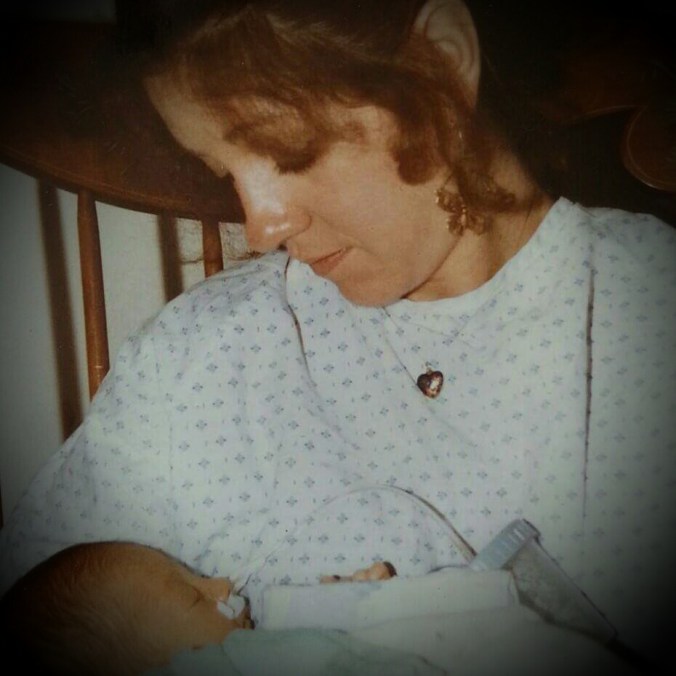
My mom and me

My mom and me

I was a new mom, weeks from being physically healed from delivery. Holding my tiny firstborn in her nursery, I felt that terrifying, beautiful, crippling love swell within me. The maternal adoration that paralyzes you with fear of countless “what ifs”, and makes you want to kiss your baby’s hands and feet millions of times in the futile hope that maybe your touch will convey just how much she is cherished.

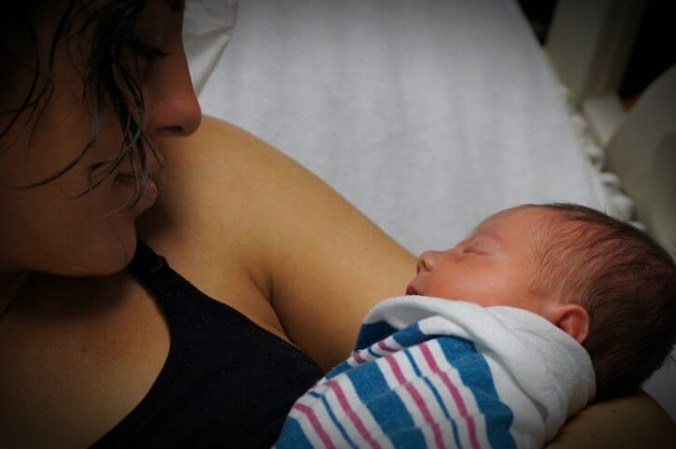
Me and #1

#1 and Me

As my heart swelled and my eyes welled amidst the powerful wave of love, everything became clear: “This is how much my mother loves me.” I stopped, slack-jawed. I recounted the fearful times, the happy times, the frustrating times, the mundane. I reflected upon my life through a mother’s eyes, not a child’s. It was as if my eyes were finally open.

#2 and Me

#2 and Me

And so I now tell my own children, “You will never understand how much I love you until you become a parent, yourself.” They look at me and smile, thinking they know how deeply they are loved, but they don’t. They can’t. A mother’s love is beyond logic, beyond reason, beyond measure. The strength, breadth, and purity of a mother’s love is simply unfathomable until you become a mother.

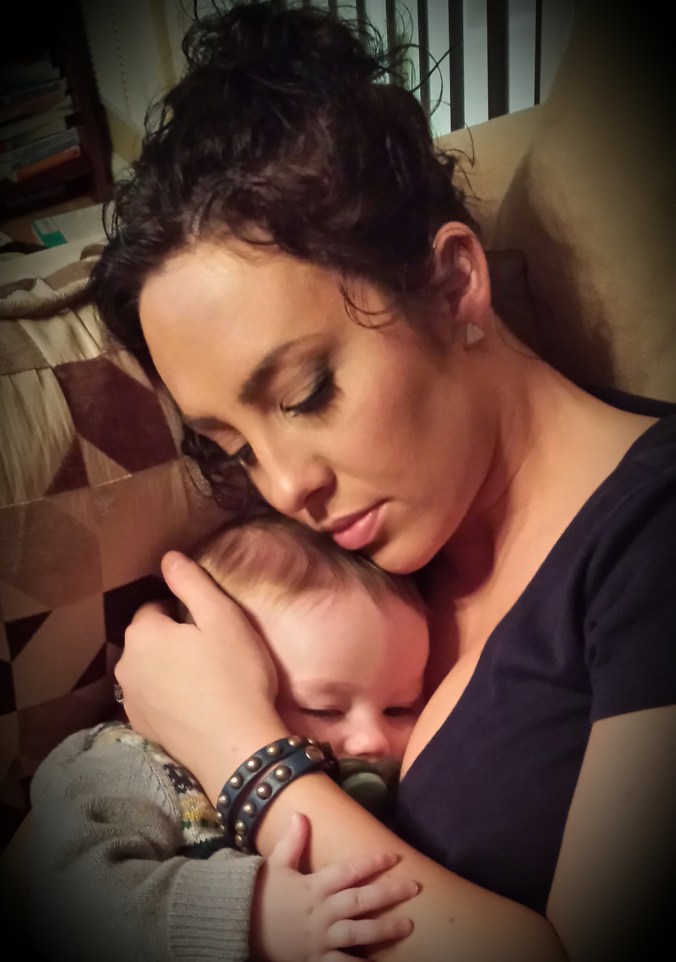
Hubs, #3 and Me

Hubs, #3 and Me

Thank you for loving me, Mom, even when I was unlovable. Thank you for the sleepless nights, tremendous worry, necessary guidance, endless self-imposed guilt, and ecstatic rejoicing. You are a great mom, a strong woman, a doting grandmother, and giving friend. You taught me how to be a mom and that is something I cannot repay.

Mom and Me

Mom and Me

I love you but I know you love me more, because you’re my mother. Happy Mother’s Day!


They’re Testes not a Free Pass

Men are not incompetent. Women are not innately or universally better caregivers than men. So why do we assume this to be true?

Why, when my husband wrangles our three children — 4.5-years, 3-years, and 10-months — do people react with shock, but it is assumed that I can easily manage the troublesome trio? Do my ovaries offer me a child rearing superpower? Do his testes render him incapable of tending to his own offspring? No.

Hubs takes offense to the notion that he is assumed underqualified to effectively tend to his own offspring. That mindset is one of the reasons I adore him.

“I don’t do diapers.” some men say with a macho sense of superiority, as if their y-chromosome places them above the unsavory portions of caregiving. Apparently, the universe granted these stallions the option of making such a choice, but not women. “I can only handle one child at a time.” Some fathers will claim, even though they sired multiple children. It’s as if these sowers-of-oats don’t realize they’re demeaning themselves out of sheer laziness. Then, there are my favorite set, the myopic brutes who insist that they — the paycheck-earning men — need regular breaks from household humdrum yet their female counterparts neither deserve nor require such respite. To all of these fathers I say: think again.

You spawned the children, you parent the children. What you expect your mate to do in terms of childcare, you must also be willing to undertake.

If you “don’t do diapers”, you are expecting your counterpart to assume a duty you deem lesser, thereby implying she is lesser. Is that really a conversation you feel like having? Grab some baby wipes and clean the baby bum. You’re manly, you can take it.

If your significant other, with whom you share guardianship, is capable of wrangling all of your shared children, buddy, so can you. It may take some trial and error but you’ll learn, exactly as she did.

Everyone needs regular breaks — from work, routine, etc. — and a presence or absence of female anatomy does not negate this requirement. You, dear sir, need just the same (yes, the same) number of breaks as your co-parent. You are not a babysitter any more than she is. You cannot claim to be too overworked or underqualified to allow her a break unless you offer her the same veto power for your respites. This is a partnership.

Even if your significant other is a stay-at-home mom, your bread-winning status does not absolve you from parenting duties. Her lack of financial contribution to the household does not mean her duties are lesser or that you deserve downtime more than she does. You don’t work 24/7 without assistance or a break; neither should she.

Claiming ignorance or incompetence when it comes to caring for your own offspring doesn’t make you more masculine, more attractive, or more powerful. It simply debases you, degrades your partner, and — quite frankly — makes you appear lazy, selfish, misogynistic, antiquated, and inept.

Parenthood is a joint venture. Do your part. End of story.