Kindergarten: Why It’s a Big Deal

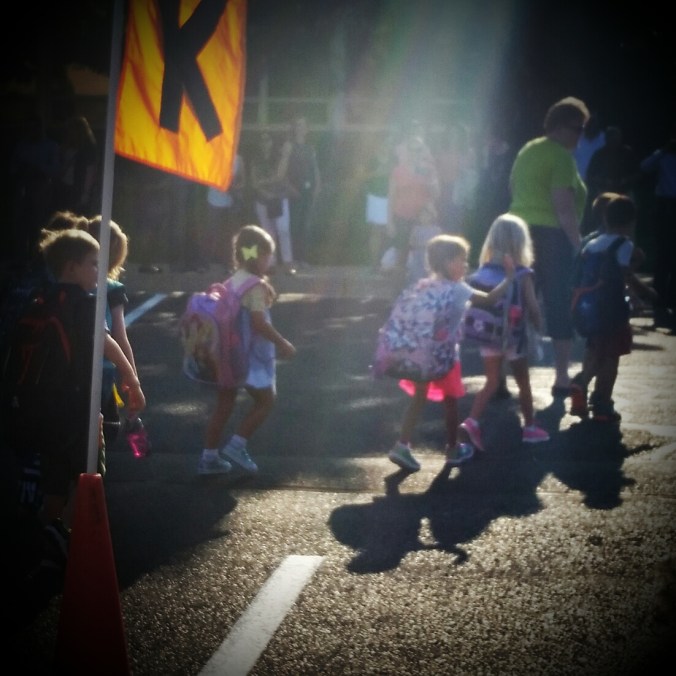
As I wiped away tears after watching my firstborn walk into her new school for her first day of kindergarten, I asked myself: why is kindergarten such a big deal? We’ve already experienced the “first day of school” three times before with preschool. What is so momentous about this year?
2016-08-30 08.31.30

It’s more than just starting school, I realized. It’s a departure from a safety net. It’s the beginning of a new chapter. A new way of life.

For many children — and their parents — kindergarten signals the start of a new routine. No more half-days of preschool. No more Memorial Day to Labor Day school calendar. No more post-naptime playdates or 2:00 swim class. Kindergarten runs on the same 7-hour timetable as grade school and high school. That means that this new regiment of early rising and afternoon pick-up will be in place until the child is at least 18-years old. That’s 13 years!

Homework, carpool, projects, standardized testing, PTO meetings, and back-to-school night… the makings of a school-centric, instead of home-centric, chapter. Packed lunches and permission slips, playground tumbles and social tussles, school nurse visits and principal’s office scoldings. It is a time of routine and hurdles. It’s a time of growth.

For stay-at-home parents, the transition is particularly poignant. Accustomed to initiating and witnessing most playdates and social activities themselves, stay-at-home parents will now only hear snippets of their children’s days. Piecing together the verbal puzzle to construct a vision of the child’s experience. No longer sharing in their child’s life first-hand. They are a distant bystander awaiting filtered highlights from a not-always-willing narrator.

Someone else will bandage the boo-boo and open the juice pouch. Someone else will offer solice when egos are bruised and knees are scraped. Someone else will teach and shepherd, protect and comfort our children. We are no longer THE caretaker.

The transition signals as much a change for parents as it does the children. It is a step towards independence. A step into the big world.

May all the fledgling kindergarteners find comfort, joy, and inspiration in their new school year. May all the parents feel secure in the care provided by the schools. May the year ahead be one of positive growth and development. May we all stand together to celebrate and comfort one another through this transition.


The End of an Era

#3's infant car seat and #1's final car seat ready for retirement

#3’s infant car seat and #1’s final car seat ready for retirement

It’s the end of an era. The car seat that all three of my children have used is being retired. It has safely transported each of my babies home from the hospital. It has made countless beach trips, Target runs, and pediatrician visits. It has survived spit-up and tantrums, teething gnaws and bottle spills. It has been washed and disassembled, re-covered and repurposed multiple times.

As the infant car seat is tucked away, so is my eldest’s car seat. With kindergarten approaching, and along with it the requirement that children must be able to unbuckle themselves for morning drop-off, my 5-year-old is transitioning to a booster seat. A simple seat belt restraint instead of a 5-point harness. More independence, more freedom, more responsibility.

They’re growing up so fast. Time is moving so quickly. Yet it feels as if I am standing still. Grasping at memories in the whirlwind, hurriedly collecting shreds of moments as they fly past, unaware of myself or my own station amidst the swirl.

This chapter is closing. A new one is opening. I must not mourn the past but rejoice in what lies ahead.

Memory Hoarder

As summer draws to a close, as the sunny season has but days remaining, I am selfish. Planning daily outings with my children, I contemplate inviting friends to join. Then quickly dismiss the thought.

IMG_20160816_123938

Turning activities into playdates is my norm. “Friends make things more fun,” I say. Encouraging social behavior in my children is a goal. But now, in the final moments of summer, I am hoarding memories, cherishing moments, and stockpiling hugs with my little trio.

Do I feel guilty about it? A little… but it’s worth it. This summer they’re 1-, 3-, and 5-years old. Next year will be entirely different.

I’m a memory hoarder and I’m ok with it.

Motherhood Changed Me

Motherhood has changed me… drastically. I am in no way the same person I was before. And I am immensely thankful for that.

#2 and Me

#2 and Me


As a child, I was so shy that I remember bawling when, at 6-years old, I had been asked by my mother to run into the convenience store to buy milk. The thought of interacting with the cashier — an unfamiliar adult — terrified me. Another time I nearly melted into a sobbing puddle when she asked me to run into the dog groomer’s to pick up our cocker spaniel. Conversing with strangers was a massive undertaking.

In school I had a few close friends but I never felt I fully belonged. I was self-conscious, anxious, and generally just lost. I was guarded and clingy. Socializing was entirely exhausting.

I clung to familiar faces in unfamiliar settings. I got miffed when my safety nets would want to branch off and meet new people. They didn’t want to abandon me; they simply wanted to meet new people too. I understood their desire — I wanted that as well — but I was far too shy to follow in their footsteps. Instead of encouraging their social goals, I’d get resentful (really, I was angry with myself but it was easier to throw that frustration on someone else.)

My shyness continued into young adulthood. After college, I began working in an office that predominantly employed associates at least 10 to 15 years my senior. So, my feeling of not fitting in continued. I was so much younger than my colleagues that I amplified my guarded nature in order to secure my professional demeanor. Unfortunately, this was isolating.

Then came the struggles trying to conceive. Hiding that burden burried me deeper into my self-imposed isolation. I felt unfulfilled, unhappy, and stressed. I was lost.

Then I got pregnant. Just as a colleague had once told me would happen, a whole new world of people came into my life. My pregnancy showed quickly and obviously, so people — familiar and not — felt at ease discussing pregnancy and babies with me. I enjoyed the built-in conversation starter.

I began to grow accustomed to conversing with strangers. It felt good, even when the strangers had verbal diarrhea, as is so very common when people chat with expectant women, I found the foibles entertaining. Heaven knows I had made plenty of social missteps, so I was not one to judge!

After having my first child, my sense of purpose was clear. My priorities centered upon her and my little growing three-person family. My former concerns, plans, interests, and worries seemed utterly trivial. I was happier but I was still anxious and still battling shyness. Still somewhat self-conscious, but gradually coming out of my shell.

I was slowly becoming more outgoing, more comfortable in my own skin. However, I had previously been so painfully shy that I had a long road to travel.

20.5 months later, I had my second child. Socializing was paramount. I wanted my children out and in the world, learning social cues and proper behavior. I encouraged self-confidence, outgoing tendencies, and friendliness. I wanted them not to suffer from shyness as I had and still, to some degree, did. The efforts succeeded.

2.25 years later, I had my third child. I was no longer shy. Instead, I shouldered a caretaker demeanor. Upon entering a social setting, I’d seek to include, to engage the seemingly shy ones, to help others feel welcomed and safe. I smiled, I laughed, I focused on maintaining a welcoming vibe.

I started conversations easily. I was self-confident, outgoing, and fulfilled. I was no longer anxious — but still stressed as I did have three close-in-age kids afterall — and I was happy. Social engagements no longer stirred anxiety but excitement. I enjoyed connecting with others and helping shy counterparts tiptoe into a safe, friendly, nonjudgmental conversation. My purpose was inclusion.

Motherhood, out of necessity, ripped the selfishness from me and that began the healing. When you are no longer the center of your own world, you become less self-conscious and more other-centered. When you have a purpose, you no longer feel lost. When you are content, you no longer feel insecure or depressed. When you are at peace, you are happy and can share that with others.

Motherhood made me who I am now, and I could not be more grateful.

Kindergarten is Coming!

Summer is drawing to a close. Fall is creeping in. Kindergarten is coming!

#1 at her kindergarten playdate

#1 at her kindergarten playdate


“It’s time to go!” I called, baby on my hip, keys in my hand. My 5-year-old ran out of the door to the car, the fabric wings on her turquoise “My Little Pony” dress flapping behind her. Her light-up “Frozen” sneakers flashing with each joyful step. “Can I wear lip gloss?” She asked as I fastened her youngest brother into his car seat. “We’re headed to a Catholic school kindergarten playdate. Let’s stick to Chapstick.” I compromised.

When we arrived at the playground she could barely contain her enthusiasm. She clutched her sequined “Hello Kitty” purse, anxiously awaiting her minivan exit. “Perhaps we should leave the purse in the car,” I suggested, “We wouldn’t want it to get lost or broken on the playground.” She agreed.

She gripped my hand as we walk across the parking lot, craning her neck in search of other playmates. The event coordinator had just finished setting out jugs of water and disposable cups. A little girl with long blond waves approached the woman, the girl’s father just a few paces behind. “Are you here for the kindergarten playdate?” I ask the girl. She nods and flashes an excited grin. I introduce my daughter, saying, “She’s here for the playdate too.” And off the girls scampered.

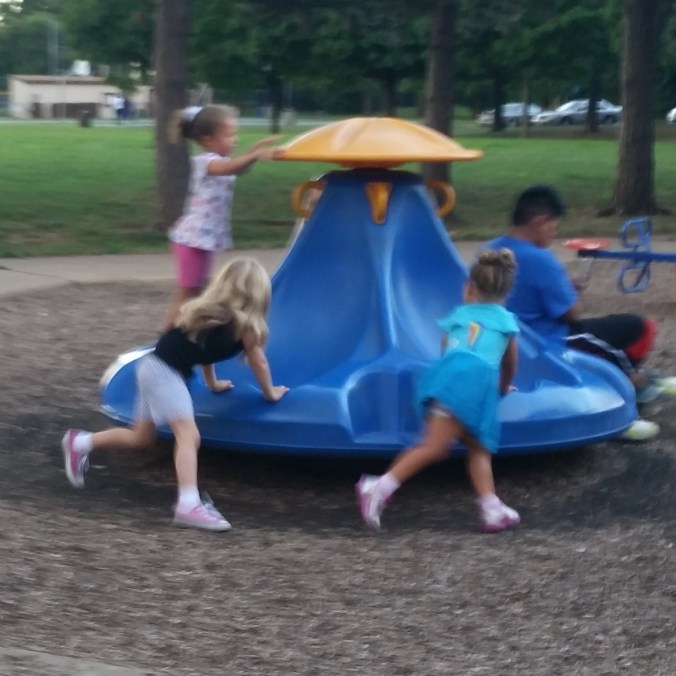
Within moments of arriving, my daughter was spinning the merry-go-round. She was in her element. Happy. Independent. She didn’t look back except to smile.

That girl is going to rock kindergarten.


Offer to Take a Picture

You’re walking down the sidewalk and see a group of people begin to pose for a photo as one of the group members steps away to act as photographer. Offer to take their picture.

You’re playing on the beach with your child and see a new parent trying to snap a photo of his or her baby in the sand. Offer to take their picture.

You’re sitting at a restaurant and see a party taking turns photographing the group. Offer to take their picture.

You’re at the park and see a young family taking a photo with one of the members behind the camera. Offer to take their picture.

You see a couple photographing scenery or one another. Offer to take their picture.

You’re at a tourist destination and you see a person craning to take a selfie. Offer to take his or her picture.

While you’re at it, take 5 quick photos from that vantage point. Snap a few horizontal and a couple vertical. You sacrifice perhaps two minutes of your time but you’ve provided a lasting memory and a kindness to someone else. And if you get turned down, no harm. You did the right thing.

Swimming After Undertow

At the beach, my 5-year-old daughter, 3-year-old son, and husband entered the sea for a swim. The ocean was tame, neither harsh nor placid. Still, swimming near the lifeguards, the children wearing flotation vests… the three were cautious.

My littlest and I played in the sand, nursed, and watched passing sign-towing airplanes as the rest of our little family reveled in the sea. Then my daughter came running towards me. Blood dripping from her mouth, tears from her eyes. Shocked, I ran towards her.

“I hit the bottom!” She sobbed. My husband and son lumbered up the beach in a daze. Their hair matted and splattered with sand. “A big wave broke farther out than usual. We all got taken down. We’re ok though.” My husband explained.

I put a towel to my daughter’s lip; nothing but a quick-healing scrape. My son was unharmed. “I’m sorry that happened,” I told her, “we all get undertowed at some point, but do you know what’s most important?” She shook her head, now calmed after her tumble. “The most important thing is that you get back in.” “Noooo!” She protested. I needed a different angle.

“You’re going to kindergarten. When you tell your new friends about how you got bowled over by a wave and hit the bottom of the ocean, what would be a more rockstar ending: ‘I didn’t go back in because I was too scared’ or ‘I went right back in because I’m not afraid’?” She smiled. “I should go back in.” She said. Then her eyes widened and her eyebrows tilted, “What if I get pulled under again?” “You likely won’t,” I reassured her, “but if you do, Daddy will be right there with you. You’ll swim right in front of the lifeguards like you did last time. You’ll be safe.”

A few minutes later, into the sea she went. She exited victorious, smiling, and proud. That’s my girl!


Life is a Dangerous Surf

I strolled seaside yesterday morning, as I did the day before, nursing my littlest in baby carrier in the hopes of lulling him into a nap. It was a blustery day. A constant rush of wind and salt beneath the sun.

The surf was rough, waves rolled on top of one another crashing into the shore. Their force carved a sharp ridge in the sand separating beach-goers from the tide. The wet sand was worn to a steep incline making my walk a challenge.

Usually I aim for a more energetic pace but this day I knew slow and purposeful would be the wiser choice. Small waves crashed and I walked through easily. Larger waves pummeled the shore and required me to stop entirely, focusing on remaining firmly planted as the water swelled around me before returning to the sea.

IMG_20160803_122558

I realized life is like a dangerous surf. Like the sea, never is our experience entirely placid, wholly calm without ripples. Just as our walk in the sand, we will never travel the same path twice. Our steps are washed away as soon as the next wave arrives. Our journey, like the sea, is ever-changing, and so are we.

Like the waves of a dangerous surf, life constantly presents us with hurdles — big and small — and we must choose how to respond. Do we stand still and wait out the swell before resuming our course? Do we force our way through and risk toppling? Or do we change our path entirely to avoid those hurdles only to gamble on what other obstacles will arise? It is not the tide that makes the decision for us. We are the ones who choose.


A Walk by the Sea

It was 9:05am and we’d just set up our morning camp on the beach. “Can we go in the ocean?” My eldest asks, tucking her sandals into the pocketed back of a beach chair. My husband looks left then right. “Not yet,” he says, “the lifeguards aren’t on duty yet.” She’s mildly disappointed but understands the rule. Caution.

My littlest begins to melt. He needs a nap. He needs me. I strap on my baby carrier, which I’d only removed moments earlier. I tuck my fussing 1-year-old into the pouch, tighten the straps, and signal to my husband that he’s in charge of the older two. Do I head towards town or walk towards the outskirts? The outskirts. Adventure.

I stroll along the shoreline, feeling the weight of my baby-turned-toddler grow heavier as sleep settles in. I breathe in the salty sea air and revel in the quiet. The morning sun sparkles on the rip tide waves. Sea birds dip and glide off shore, catching breakfast from the surf. It is beautiful. Awareness.

Children scuttle along the sand under the close watch of family. Couples smooth and spray sunscreen on one another’s skin. New parents adjust sunhats and erect tents, shielding their young from the sun. Protection.

I see three young adults in the water as two early lifeguards drag their chair across the sand and fling their day’s essentials onto their newly positioned perch. They stop. Whistles shriek. The two guards grab their orange floats and race into the water. I look to the swimmers; two are smacking at the waves as the other desperately flails toward them. A third guard shreds through the sand from down the beach. I leap out of his way. Tears well in my eyes. I hold my sleeping child close. Within seconds, each of the endangered swimmers is clinging to a lifeguard buoy. Safety.

I continue my walk, leaving the emotional scene behind me. The people here know nothing of the rescue just yards down the beach. Children play chase with the tide, dig trenches to capture the waves, and hobble with the support of parents to dip their toddler toes in the surf. It is as if that danger never occured. Peace.

I reach the end of my course and turnaround. The salty, cool breath of the ocean breeze envelopes me. The sun cloaks me in warmth. The waves bathe my tiring feet. The wet sand gives just enough without relenting. My child sighs in slumber. Mothers smile at me as I pass, glance at my sleeping baby, and tilt their heads as the corners of their mouth sink into a smiling frown. Nostalgia.

Next year will be different, I tell myself. Next year, he will be two. There will be no silent seaside sleeping strolls. This is my last year. This summer is the closing chapter of my continuous years-long brush with babyhood. I am simultaneously relieved and saddened. My eldest two children come running down the beach to me, arms open, smiles wide. Home.

It’s Not You, It’s Me

So often we feel judged or disappointed by others when really it is ourselves at the root of the negativity. If we choose to be upset, to feel failed by others, that will be our path. However — as irksome as it is to admit — the choice to experience those emotions is ours and we cannot rightfully blame others for those sentiments if we fostered an environment in which those feelings flourish.

This doesn’t mean others are blameless for their missteps, or that our own actions are without impact. It simply means that another’s transgressions — perceived or accurate — do not entirely dictate our emotional response. We control our emotions.

At times, we can project our insecurities onto others. This can lead us to make false assumptions about others. We may feel self-conscious and that sentiment can lead us to interpret another’s squint of questioning recognition or protective body language stemming from shyness as judgment or assumed superiority. This can lead us to assume others react negatively towards us when that is not the case. It can become a self-fulfilling prophecy though, if we act on our projections and adopt a standoffish demeanor as a mode of self-preservation.

Even if a person is judging us, we have the power to rise above it. We can’t control how others behave, but we can control how we respond. We can choose how to react. We can be riled or we can be calm, we can feel persecuted or we can feel unaffected. It’s our decision, no one else’s.

Sometimes we can let our expectations of others become outlandish or inappropriate for the individual. “Set people up for success; manage people according to their strengths,” a wise supervisor once told me. It was brilliant advice that was widely applicable.

If someone is a wonderfully fun friend but does not have a mind for dates, we shouldn’t expect him or her to remember our birthday. We shouldn’t get offended, we shouldn’t get upset, just should set our expectations in accordance with the friend’s strengths. If we want to socialize with that friend on our birthday, we should initiate an activity with that friend for our birthday. If we want a big gathering, plan it. If we want an intimiate get-together, arrange it. We shouldn’t live our life expecting others to read our mind, unless we want drama and unhappiness in our life.

Also, we shouldn’t expect our friends to be any different than they are simply to suit our whims — that is a line of thinking bound for heartache. Instead, we should set expectations based on individuals’ strengths — not our own strengths or wishes — and communicate clearly, thereby choosing to be happy.

We can choose to be happy or unhappy. Life’s events and scenarios may sway us one way or another but we are, in the end, the ones choosing our emotional response. We control our feelings; they do not control us.

Taking hold of our emotional state takes practice. It takes effort. It takes self-control. It takes a willpower. It takes a sturdy ego because we need to be able to call ourselves out on our bullsh*t.

Rely on yourself to create your own happiness and you’re bound to be more content. Depend on others to make you happy and you’re likely to be perpetually unhappy.